
granny square · beginner · crochet patterns · inspiration
Learn One Granny Square and You Can Make All Four of These
By Elin · October 19, 2026
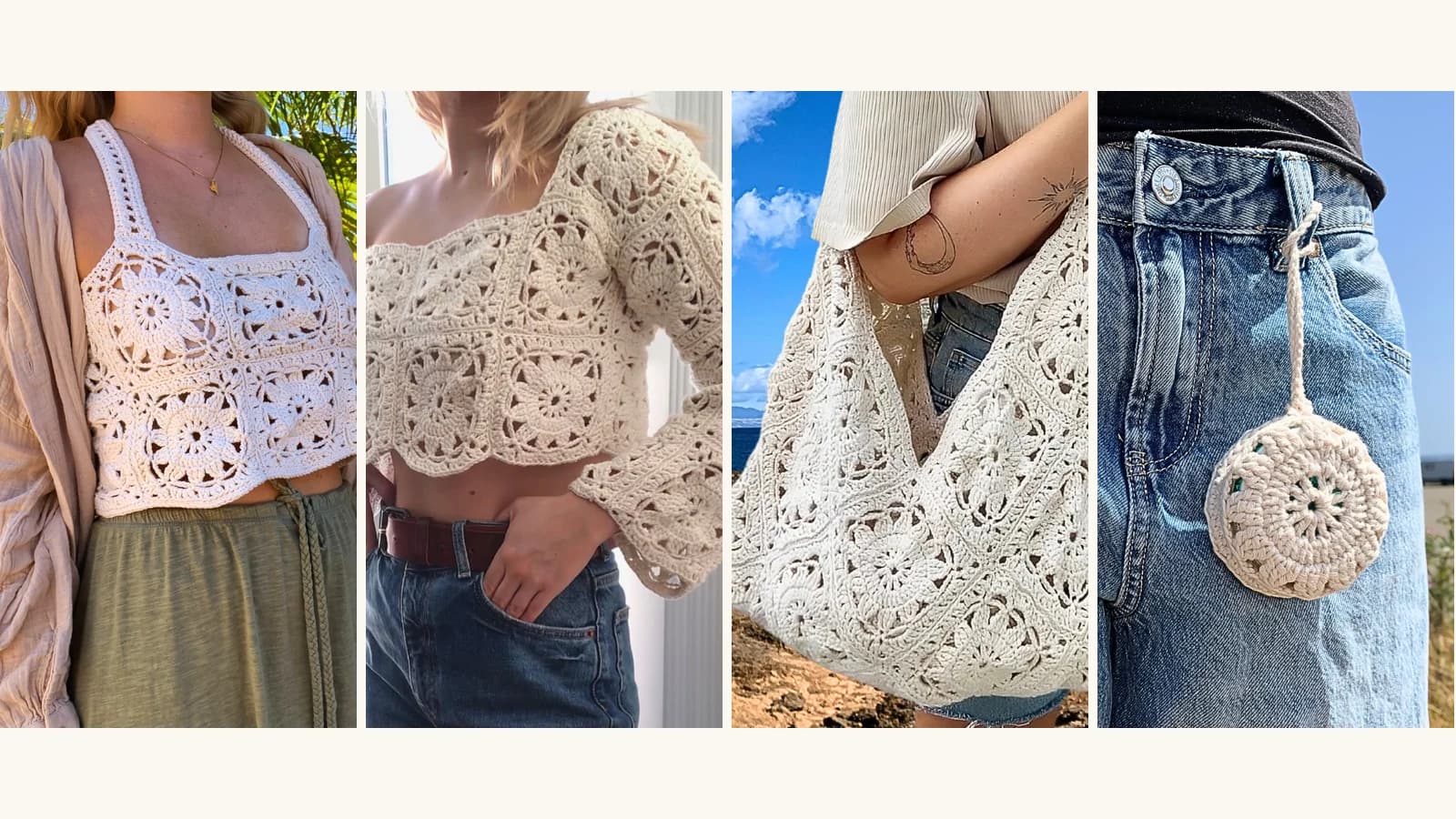
Granny squares are the friendliest way into crochet I know. You work one small piece at a time, and each one is finished before you start the next.
The four projects below are all mine, and the same square runs through every one of them. There is more to each pattern than the square, naturally, but the square is most of what you do. Find one you like working and a lot opens up.
Why granny squares are such a good project
Every square is finished in itself, so you get the satisfying part over and over instead of once at the end. Working in rounds helps too: every round closes, every square has four corners to count, and you always know where you are.
They also travel better than almost anything else you can crochet. The project is made of many small pieces, so you never have to carry the whole thing around. A ball of yarn and a hook in your bag is enough. Make a square on the train, make one while you wait for someone. The squares only need to be in the same room as each other at the very end, when you join them.
And every square is a fresh color decision, which makes this the easiest place to use up the odd balls at the bottom of the basket.
Start with the smallest one: a round pouch
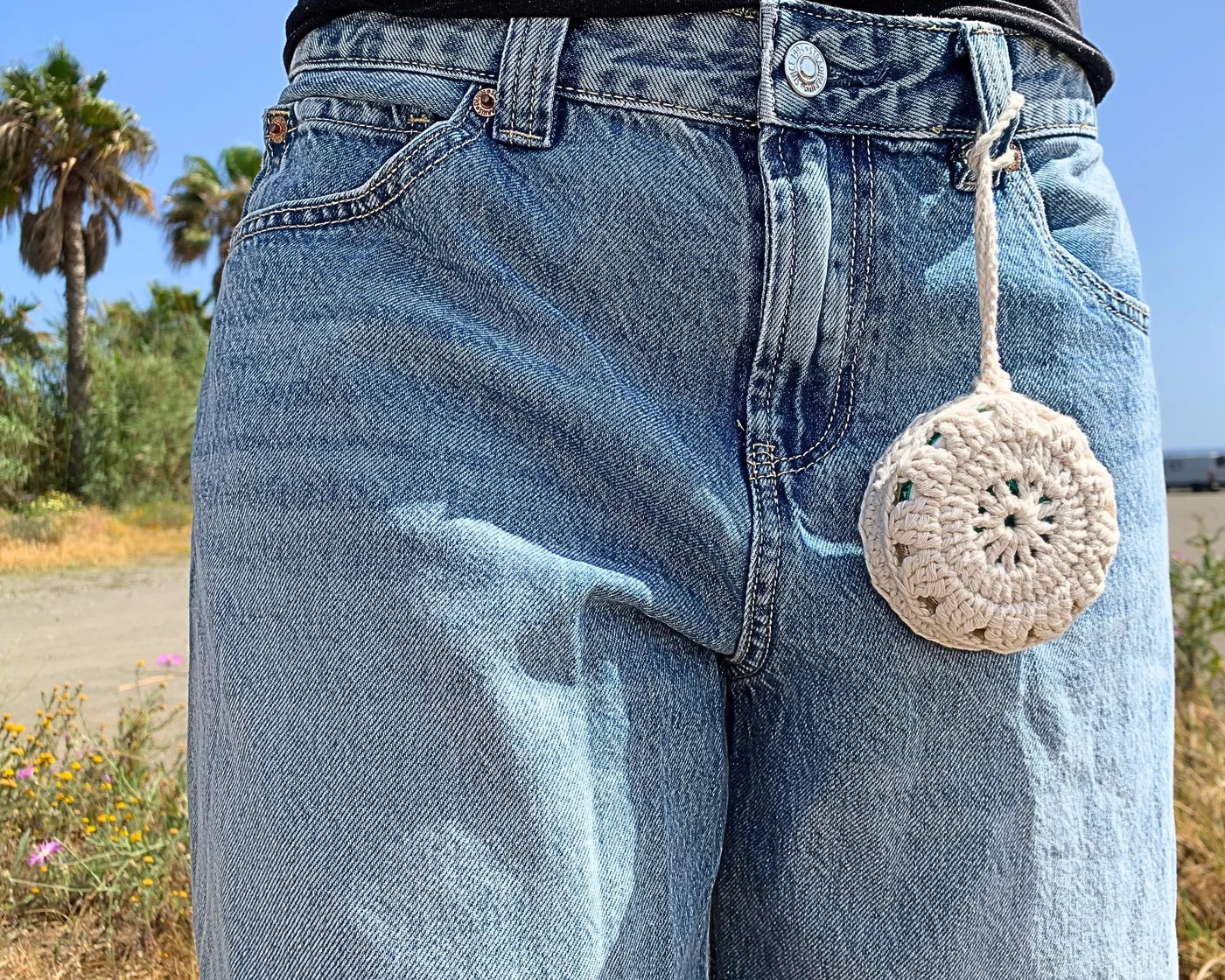
This is the same motif as the other three, worked small and left round. It comes out around 70 mm (2.75 inches) across, closes with a long loop that threads through a short one, and hangs from a belt loop or a bag strap.
Make this one first. No sizing to get right, no fit to worry about, no joining at all, and leftovers are plenty. Work it on the tight side, though. The fabric relaxes with handling, and a pouch that starts out roomy stops holding onto what is in it.
Three versions come in the one PDF. It is a snus can holder, and the same pouch takes lip balm just as well.
Then a top, where the squares start adding up
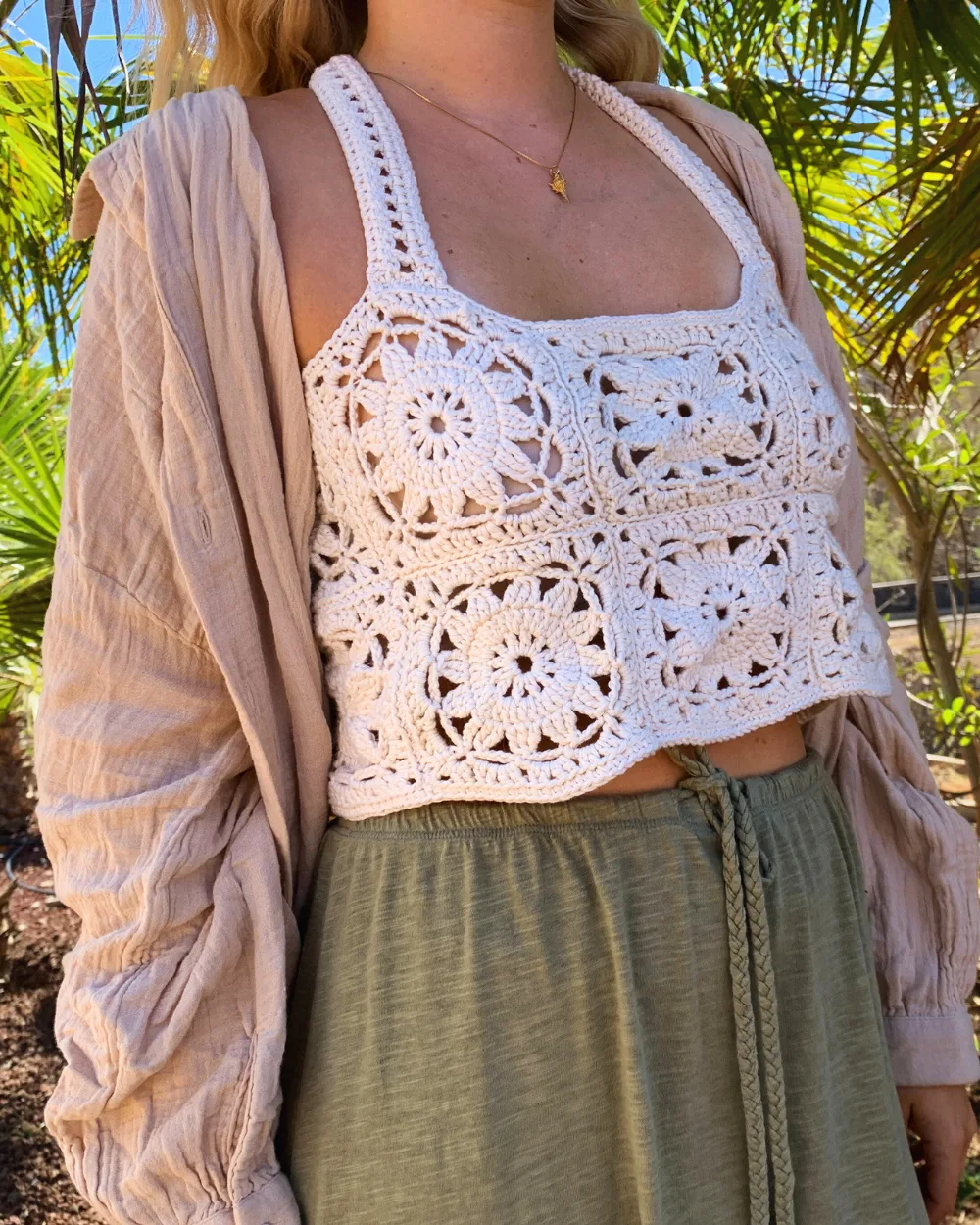
Here the motif is worked as a square and repeated, which is the step that turns one medallion into fabric. Four squares across the front, wide straps, a straight square neckline.
You add or remove squares to change the size instead of recalculating anything, so the top can be made to fit you without any math. Each square comes out around 11 cm (4 1/4 inches) with the hook and yarn given in the pattern.
Make one square and measure it before you make the rest. If yours comes out at 10 cm instead of 11, that difference multiplies by every square around your body, and square one is a cheap place to find that out.
Pattern: granny square crop top.
The bag, if you would rather not worry about fit at all
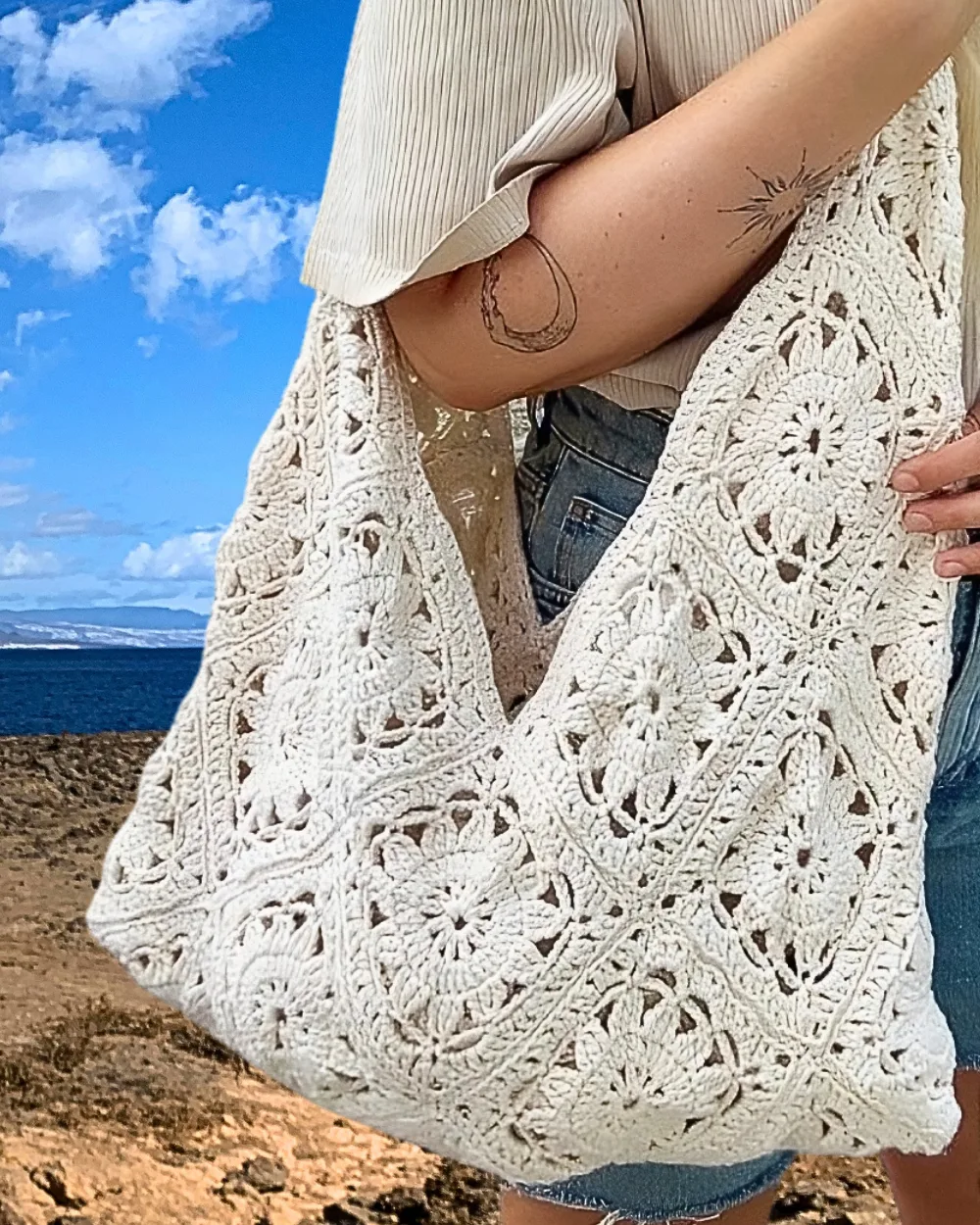
Twenty-seven squares, and nothing that has to fit anybody. A bag is where you practice joining, which is the thing that separates a tidy granny square project from a lumpy one, without any of the pressure that comes with a garment.
The original is worked in one color, but a different color on each round turns the same bag into a way through a leftovers basket. Pattern: granny square bag.
The sweater, the one you work up to
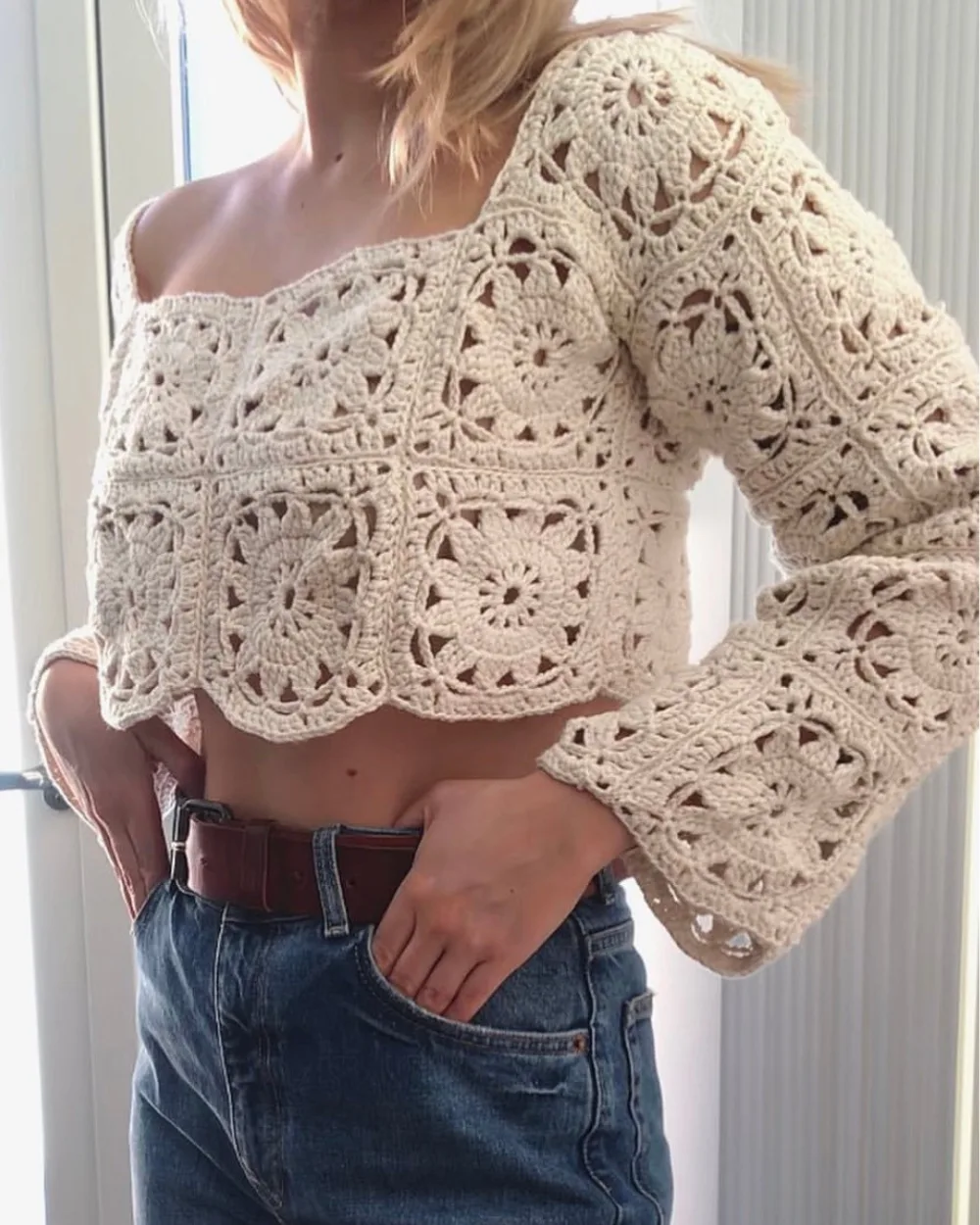
By now the motif is familiar, and the sweater does not ask you to learn a new one. It asks for more squares and a plan for where they go. The sleeves are the part that feels different, and they are squares too, arranged into a tube.
One difference from the top is worth knowing before you start. The sweater is one size, and adding squares is not how you adjust it. The measurements in the pattern photos hold when you use the same hook and yarn I did, and the finished size shifts quite a bit if you change either one. So work a square and check it first.
Pattern: granny square sweater.
A few things worth knowing first
Yarn. A smooth yarn in a light color is the easiest to learn on, because you can see your stitches. Each pattern lists what I used, and if you work with something else, compare your square against the measurement in the pattern rather than trusting the label.
Blocking. Wet the square, pin it square, let it dry. It is the single biggest difference between a homemade-looking granny square project and a tidy one. Block before you join.
Ends. Weave them in as you finish each square. Twenty-seven squares with two ends each is a long stretch of work waiting at the end of a project, and that pile is where most unfinished projects stop.
Terms. All my patterns use US crochet terms.
Where to start
Pick by how much you feel like taking on rather than by how good you think you are. The pouch tells you whether you enjoy working the square. The top is the first real garment and stays forgiving because you size it by the square. The bag and the sweater are the ones to take on once the square comes out the same every time.