
nybörjare · guide · garn · virknål
Choosing yarn and a hook: how to think it through
By Elin · September 18, 2026
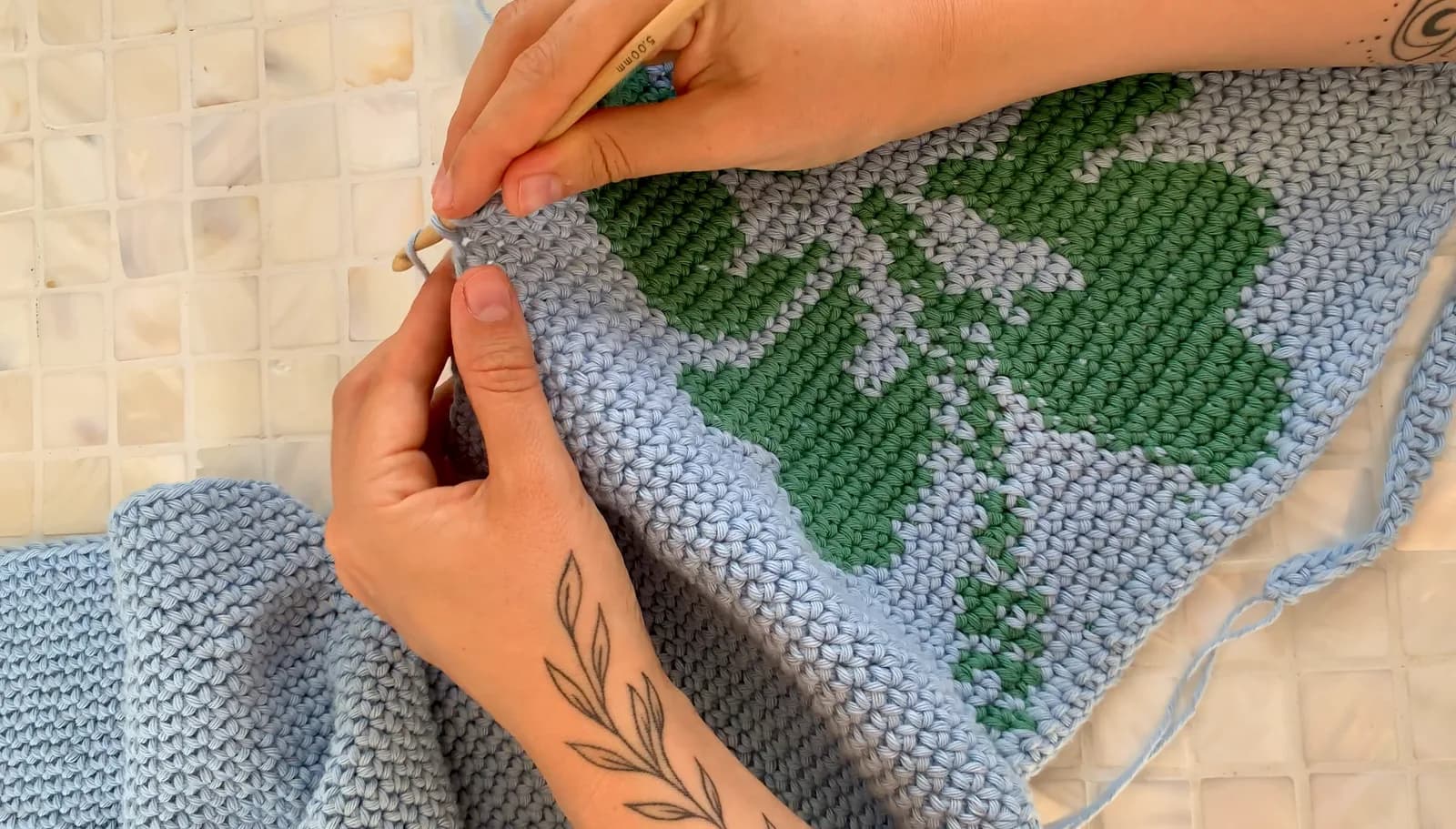
To get started with crochet you only need three things: a hook, some yarn and a pattern. The hard part is not finding them – it is knowing how to pick a combination that suits what you actually want to make. Here is how I think it through.
How to choose yarn
Start at the other end and ask what the finished piece has to do.
- Does it need to hold its shape? Bags, baskets and amigurumi need a yarn with backbone. Cotton and linen barely stretch and keep edges straight.
- Should it drape? Cardigans, tops and skirts want flow. Wool, viscose and soft blends hang far more gracefully against the body.
- Will it be washed often? Superwash wool, cotton and acrylic handle the machine. Untreated wool and novelty yarns usually do not.
Thickness matters more than brand
The thickness of the yarn decides both how big the piece turns out and how long it takes. Thick yarn grows fast but gives chunkier stitches, thin yarn gives finer detail but takes longer. If the pattern states a weight, stay close to it – swap to something much thicker or thinner and every measurement changes.
Colour and texture decide how well you can see your stitches
This is the advice I give beginners most often: pick a light, solid, smooth yarn for your first project. Dark, variegated or fluffy yarn hides the stitches, and then it is hard to see where the hook goes. Save chenille and faux fur for when the stitches are in your hands.
Read the yarn label
The band lists a recommended hook size, the length per ball and washing instructions. Treat that hook size as the maker's suggestion and your starting point, not the final word.
How to choose a hook
The hook decides how dense the fabric turns out. The same yarn gives completely different results depending on which hook you reach for.
- A smaller hook gives a tighter, stiffer, smaller piece. Good when something has to hold its shape – a bag, or a stuffed figure where the filling must not show through.
- A larger hook gives an airier, softer, bigger piece. Good when something should drape or be slightly see-through, like a lacy top or a beach skirt.
The hook size in a pattern is a starting point, not a rule. Everyone crochets at their own tension – if you work tightly you may need to go up a size, if you work loosely go down. It is the fit that has to be right, not the number on the hook.
The material matters for your hands too: metal glides fastest, bamboo and wood slow the yarn slightly, and plastic is light but can feel sticky with some yarns. There is no correct answer – try a few and see what feels good to hold for a long stretch.
Make a swatch first
This is where the yarn and the hook meet. Crochet a small square with the hook and yarn you intend to use, then count how many stitches and rows fit in ten centimetres. If it matches the pattern, you are good to go. Too small a square, go up a hook size. Too big, go down.
Ten minutes here saves hours of disappointment over a garment that does not fit.
Where to go next
Once the yarn and hook are sorted it is time for the crochet itself. In the guide to the basic stitches I walk through the six stitches almost every pattern is built from, with a photo of each.